

Preaching Without Notes: The Best Way To Learn Your Sermon Manuscript

Getting to the Place Where It’s Mostly You, Your Bible, and Your Congregants

I have the privilege of working with some young preachers regularly. One thing I see regularly is how difficult it is for them to learn their material well enough to not have to rely heavily on their notes. The result shows up when they lose their place during preaching. I see it in their non-verbal: breaking eye contact and looking at their notes for an inordinate amount of time.

One key for me?

When I start studying, I start writing the sermon. I never do sermon preparation without sermon articulation. Never.

Here’s an example of what it can look like or sound like:

Matthew 20:29 And as they went out of Jericho, a great crowd followed him. Obviously, great crowds followed Him because tons of people wanted to see His miracles or needed one for themselves! Case in point, look at v. 30…

30 And behold, there were two blind men sitting by the roadside, and when they heard that Jesus was passing by, they cried out, “Lord, have mercy on us, Son of David!” (cf. also v. 31b) You and I tend to read and skim over the “And behold” part, but it’s a huge part of the story. As Jesus and company leave Jericho and as “a great crowd followed him,” God draws our attention to these two characters. The “behold” in a story like this is God saying, “Get your attention on these two men and their situation. This is critical for what I am saying to you this morning.”

I think all of us church people see this and think, “Why wouldn’t two blind men react this way?!” But, let’s look carefully about what their actions imply. First, and most obvious, they both need a miracle; they both need to regain their sight in order to have a better life. That one’s easy.

Second, they both believe they need Jesus’s “mercy” (reflects the word order where this is first: ἐλέησον). This is the posture for healing, all forms of healing. In our story, it’s primarily about physical healing, regaining physical sight. In your story, it is the posture for any hope of spiritual and emotional healing, for any hope of spiritual growth and maturity. Mercy is “to be greatly concerned about someone in need, have compassion/mercy/pity” (BADG). But to ask for mercy in this case is to ask Jesus to extend compassion and help.

Now, here’s where this is important for our spiritual journey and growth. Asking Jesus for mercy means you need His help. This implies that (1) you are not trying to fix the situation yourself; (2) you are aware of your need for Him, instead of thinking someone else needs to change. Both attitudes are necessary in order for healing to take place. Think about what this means for becoming a Christian: you must ask God for mercy in order to become a Christian (flesh this out…). Think about what this means for your growth as a Christian (your growth of faith and righteousness): you must ask God for mercy (flesh this out…)

If you read the “sermon” excerpt, does it sound like I’m speaking to my congregants?

If you thought, “Yes, it does,” then you’re seeing the number one key to learning your sermon:

when you start studying, start writing your sermon.

Maybe more on this next time.

Regardless of whether you preach with or without notes, may our Lord receive glory in the church and in Christ Jesus (Ephesians 3:21).

Randal
A Lesson on Preaching from the Producers of, Everybody Loves Raymond

Conveying the “Life and Death” Importance of the Word of God Each Sunday

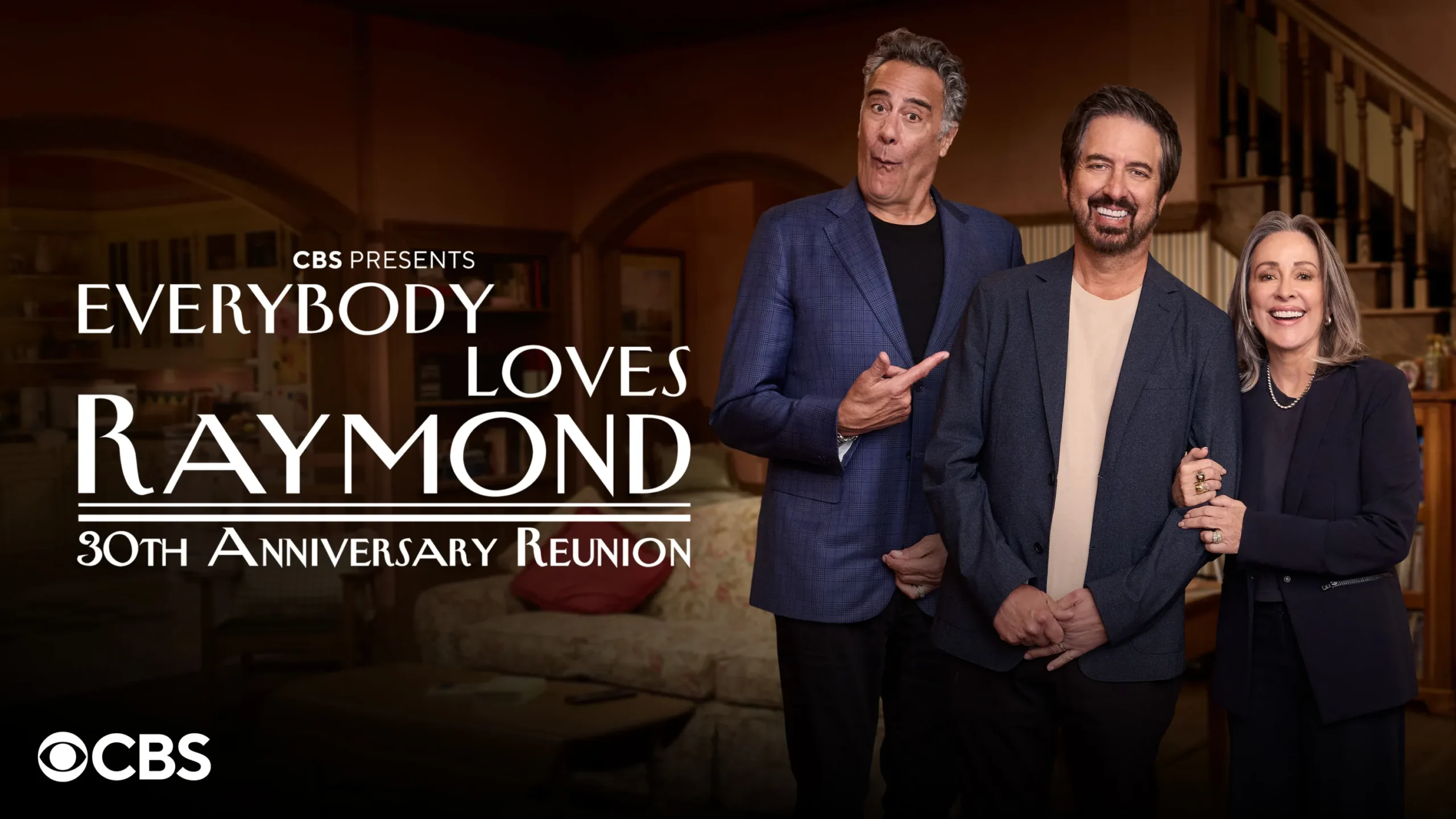
A few weeks ago, Michele and I watched the 30th Anniversary Reunion of the main producer and cast of the TV series sitcom, Everybody Loves Raymond.

If you’ve read my blog for a while you know I enjoy seeing parallels between communicating God’s Word in church on a Sunday and the way performers communicate through their craft. Here’s another example.

The producers of, Everybody Loves Raymond, explained why that series worked so well with that cast. Their answer was:

“[the cast was] fully committed to silly things as if it was life and death.”

The commitment of the cast of actors made the show enjoyable because it made it believable. All good actors do that to draw you into the reality they are creating.

How much more so should we be conveying our commitment to, not a silly thing, but the most important thing: God’s revelation in sacred Scripture!

Effective communicators convey that sense of “life and death” in their preaching of God’s Word. May our people this coming Sunday sense this so our Lord receives glory in the church and in Christ Jesus (Ephesians 3:21).

Randal

P.S. Blessed New Year to you!

P.P.S. I may have mentioned many posts ago that one of the most common elements in my evaluation of young preachers is that I don’t get the sense from you that this Word from God is a matter of life and death.

Effective Preaching from Judges’ Comments on American Idol 2025

Three Judges for American Idol, plus Jelly Roll

Almost every year I learn something about effective preaching from judges’ comments on American Idol.

I know; you’re shocked by that. I get it.

But for years I’ve paid close attention to their feedback to these young singing artists. This year is no different. I’m writing this as Michele and I get ready to watch the current episode (they’re down to the top six and I’m rooting for country singer, John Roberts).

A few weeks ago, here’s what legend, Lionel Ritchie, said to my favorite:

“You were so comfortable that it made it believable for us.”

Preaching works like that too. To the degree that you and I are comfortable as a result of trusting the Lord while preaching, there is a level of believability that helps our congregants respond to God.

And then, that same evening, guest mentor and legend, James Taylor, said to the young lady singing the song, Take a Little Piece of My Heart,

“Read the lyrics out loud without the music to get into the story.”

Another gem for preachers. She was singing but she wasn’t believable. She needed to “get into the story.” Again, we help our listeners when we are able to relate well to God’s Word. They sense it and it helps them in some way to believe it too.

By the way, I never remember a year on American Idol where so much attention was given to Christian music. One whole evening was devoted to songs of faith. And Jelly Roll is a guest musician showing up each night and demonstrating incredible heart for these performers.

Thanks for reading a lighter-than-usual post!

May our Lord receive glory in the church and in Christ Jesus (Ephesians 3:21) as we continue to strive for excellence in the delivery of God’s Word each Sunday.

Randal

P.S. Vote for John Roberts!

What Can I Do That AI Can’t? Reflections for Preachers in a Digital Age

What Preachers Can Do That IA Can’t Do

I am offering a more light-hearted post this afternoon, the result of my first exploration into ChatGPT (I know, I’m late to the party!).

So yesterday, before completing my sermon review for this morning’s preaching on Psalm 95, I decided to see how AI would handle that Psalm. The short version: very impressive with respect to summarizing the main idea and suggesting applications.

Then, I thought: “I wonder how it would answer this question: ‘What can I do as a preacher that you cannot do?'” Be encouraged in your work by the following:

  1. You provide Holy Spirit-empowered exposition of Scripture. “AI can analyze, suggest, even imitate—but it cannot be filled with the Spirit or move in communion with the living God.
    You preach with presence. AI can only offer presence in metaphor.”
  2. You preach to your people in person. “You embody the Word in relationship. AI only operates in response.” [As an aside, even the great preachers online or TV cannot do what you do: provide that personal context.]
  3. Your preaching is an act of soul-watching. “Preaching carries divine weight (kērygma) that can’t be outsourced to a machine. Your voice carries the mystery of vocation.”
  4. You preach as a person who is under the Word of God with all your own struggles of faith. While you’re preaching you’re responding with your hearers. “You can bleed with the text. AI can only parse it.”
  5. Your preaching includes helping your listeners apply their lives to God’s Word in the moment. “You can pastor while you preach. AI can only perform analysis.”

Then, ChatGPT provided this wonderful little summary:

In Summary:

Preacher (You)AI (Me)
Spirit-filledData-driven
Embodied & pastoralDisembodied & generic
Relational & contextualContextual only to prompt
Authority by callingUtility by design
Participates in mysteryObserves the mystery

Then, finally, it gave this closing statement:

“This distinction is not meant to diminish AI’s utility but to clarify the uniqueness of the preacher’s role. Tools like this can assist, supplement, and enhance our preparation—but they can’t replace the Spirit-led, relational, incarnational work of preaching.”

It can’t replace YOU! Be encouraged!

May our Lord receive glory in the church and in Christ Jesus (Ephesians 3:21) as you do what AI can’t do!

Randal

My Summer Sabbatical Is Officially Over Which Means I Wrote Two Books!

Rest, Research, WRITING, Riding Around Is Over!

Thanks to the leadership of Calvary Bible Church in Mount Joy, PA, Michele and I enjoyed a summer sabbatical. The bad news is it’s officially over; I am headed into my first normal Saturday evening and Sunday morning since May! Lord have mercy!!

However, being away from church duties for those weeks allowed me to write two books.

First, I was able to complete, Preacher As Soul-Watcher: Why You and Your Congregants Need Your Sermons. It’s a theology of preaching in the local church based upon Hebrews 13:17 and 1 Timothy 4:13-16. That book is now available through Amazon in e-book format. The paperback version should be available in a few days.

Second. I have completed the first draft of, The Monday Morning Expositor: Rethinking Your Study Sequence For Sermon Development. Lord willing, it will become available in a week or so. That book is a practical guide for a preacher’s first few hours in the study. It focuses on a reversal of the normal process we learned in seminary. I call these four elements, pre-exegesis. They provide a big-picture look at the preaching portion that becomes the backbone for collecting normal exegetical data.

Back to the first book for a moment. One of my favorite sections in, Preacher As Soul-Watcher, is the exposition of 1 Timothy 4:13-16. Verse 15 ends with a surprise:

“…so that all may see your progress.”

In the book I write, “For some reason it is important for our parishioners to see us advancing….It is important that soul-watchers improve with respect to their faith-journey and ability to minister to God’s people.”

Later I quote Fee’s explanation: “By Timothy’s being a faithful minister of the word of the gospel, the people will be able to see the real thing.” (Fee, 1 and 2 Timothy, Titus, p. 109, emphasis added)

On July 18, 2024 the WSJ ran an article, Sellouts, Streaming Put Country Atop The Music Business. What caught my attention was how popular Country music is right now and why. Back in June, the country music legend, George Strait, broke a record for most tickets sold at a U.S. concert (more than 110,000!).

And the “why?” One singer, Megan Moroney, said

“Authenticity is selling right now.”

The real thing.

Tomorrow morning, Lord willing, I will enjoy the privilege and responsibility of delivering the real thing. Authentic preaching.

That means believing what God is saying to us in Matthew 13:31ff.

That means living like I believe it.

That means communicating it is a way that conveys I believe it and live it.

May our Lord receive glory in the church and in Christ Jesus (Ephesians 3:21) as you and I go to work Sunday morning.

Randal

The “intense preparation” it Takes to Preach Without Notes

It’s not so much about whether you have notes or not, but…

In my previous post I mentioned reading, Augustine and the Cure of Souls: Revising a Classical Ideal, by Paul R. Kolbet. It’s one of those books that majors on pastoral ministry with a minor in preaching.

One of the interesting things about the book is that it shows how the Greco-Roman world of Augustine’s day influenced his understanding of pastoral ministry. One way the G-R world influenced Augustine and all public speakers was in the area of speaking without notes.

Here’s an example:

“To a sophist’s audience, such oratorical display appeared spontaneous and effortless–the ad lib creation of the moment coming into existence in their very presence–but that spontaneity was, in fact, an illusion made possible through intense preparation and skillful use of known rhetorical methods.” (p. 21)

Yes, “an illusion made possible through intense preparation…”

Elements of that kind of intense preparation are:

  • Begin writing your sermon from the moment you begin studying the text. This means training yourself to never write notes without thinking about how you will say it to your listeners. As you write, you’re talking to them about them from the biblical text.
  • Treat your biblical text as your cue card. If you are an expositor, then the Bible is your primary manuscript. I use to tell preachers-in-training: “If you lose your place in the sermon, just look down at your Bible, find your place in the text, and continue. No one knows your plan which means they don’t know you’ve lost your place unless you tell them.”
  • If the biblical text is your cue card, that means you should be able to follow the logical flow of thought or argument of your text. This is critical for helping your listeners follow along with you. This will prevent you from losing your place.
  • Internalize both technical and restatements of the most important theological concepts in your text. This does take some time and effort. Know key definitions from HALOT or BDAG, for instance, but also an easier-to-understand version you’ve created.
  • Finally, save time Saturday evening and early Sunday morning to read through your manuscript carefully, editing along the way. You’ll experience times when you say, “That isn’t clear to me,” or “I lost myself at this place,” or “There’s a better way to say that.” Great learning takes place during these practice sessions.

And, the bottom line is, it’s not how many notes you have or don’t have in the pulpit that makes communication effective. It’s how well you communicate with your parishioners. Do they hear you talking to them about the Bible or talking to them about them from the Bible?

May our Lord continue to receive glory in the church and in Christ Jesus (Ephesians 3:21) as you continue to communicate His Word each Sunday.

Randal

P.S. Most Sunday’s I have on my iPad a limited number of Scripture verses or quotes from authors that I don’t want to memorize, but want to read.

Assisting our “Silent Learners”: Augustine on Preaching

Some of Our Listeners may Be Silent, but They Are Thinking.

I wrote recently that I finally read Augustine’s classic little paperback, On Christian Doctrine (translated by Robertson). Augustine provides a look at one challenge of the traditional, monologue sermon. He instructs his students,

“In a conversation anyone may ask questions. But where all are silent that one may be heard and all are intent upon him, it is neither customary nor proper that anyone inquire about what he does not understand. For this reason the teacher should be especially careful to assist the silent learner. [emphasis added]” (p. 134)

You can see that, in Augustine’s day, preachers didn’t engage in dialogue with their listeners. In his era, all were “silent that one may be heard and all are intent upon him.” Probably your preaching resembles that too. You preach and your parishioners listen without asking questions about what they don’t understand.

Here are some things to think about as you develop this week’s sermon(s) that will help you “to assist the silent learner”:

  1. As you study your preaching portion, make a list of all the questions you have of this text.
  2. Try to anticipate the kinds of questions that someone who has not studied as much as you might ask of that text.
  3. Try also to anticipate the disagreements they may have with you as you preach. One homiletician called these push-backs, contrapuntals (I knew you’d like that word!).
  4. During the sermon, ask your listeners questions in such a way that they know you expect them to answer. Even if you don’t expect them or necessarily want them to answer, still ask a question sincerely to help them think with you. I say that because, through the years, I’ve seen more than one preaching ask their congregants a question in such a way they knew he really didn’t expect an answer.

Our typical monologue-method on Sunday mornings presents some real problems for communicating biblical truth. Through the years I’ve found a conversational style to be more effective than the one-way method. Most of my listeners are used to monologue sermons, but appreciate the conversation.

If you find that you fit into Augustine’s mode of preaching, may our Lord receive glory in the church and in Christ Jesus (Ephesians 3:21) as you carefully assist your silent learners.

Randal

For all the care you put into artistry, visual polish frequently doesn’t matter if you are getting the story right.

Ed Catmull, former President of Pixar Animation and Disney Animation

Creativity, Inc.: Overcoming the Unseen Forces that Stand in the Way of True Inspiration (NYC: Random House, 2014), 37

Preaching For Life-Change: A Guest Post From Dr. Roger Raymer

Our First Reunion Since The Late 80’s!

I am writing this from Puebla, Mexico. Michele and I have the privilege of visiting with veteran missionaries, Bryan and Lori Smith. Bryan invited us to come and speak to their annual Intermission Conference. What a surprise to hear that a guy named, Roger Raymer, was also here! Roger was part of the Pastoral Ministries department at Dallas Theological Seminary while I was attending in the mid to late 80’s. We had a great reunion together. He graciously agreed to write a guest post for me.

First, a little about Roger. He he earned a ThM degree from Dallas Theological Seminary and a DMin from Gordon-Conwell Theological Seminary. For more than 30 years Roger served as a senior pastor and as an adjunct faculty member at Dallas Theological Seminary. Currently, Roger and his wife Judy serve with Avant Ministries providing pastoral care for missionaries in Mexico and at Rio Grande Bible College in south Texas. Roger also continues to teach in the Doctor of Ministry degree program at Dallas Theological Seminary.

Now, Roger’s guest post:

Preaching is daunting. We stand before our congregations preaching the Word of God by the power of the Spirit to change lives. I know that I cannot do that through imparting biblical facts alone. It is helpful to remind myself of the principles of persuasive rhetoric. Aristotle’s “pathos, logos and ethos” are truly “old school” but essential to communicate persuasively. The more modern terms are emotional, intellectual and ethical proof.

We use intellectual proof to convince our listeners of the accuracy of our interpretation through exegetical evidence and the logical argument of the text. Our congregations buy what we are saying intellectually.

Pastors have a high degree of credibility or ethical proof. Our personal integrity, education, and pastoral care cause our congregations to trust us and believe us.  

Where we often fall short is in the crucial area of emotional proof. Pastors in the non-charismatic, evangelical tradition have tended to avoid almost any form of emotion in worship and preaching.  However, emotion is not foreign to the biblical text. The Old Testament prophets voiced powerful emotions to touch hearts. We should touch the hearts of our congregations as well.

Emotional proof is more than tears and laughter. “Pathos” appeals to one’s hopes and aspirations through vivid word pictures of the positive consequences of obeying God’s Word. We touch hearts when we relive real emotion as we share a personal experience or illustration that affects us emotionally. If we tell a story with real emotion in our voice our listeners will be moved emotionally as well.

Why is this important? Usually, individuals will not base a life changing decision on information or logical facts alone. Intellectual understanding will move someone toward a decision but it often takes emotional proof for life change to take place.

Clearly, spiritual growth is the work of the Spirit. Our responsibility is to provide the rhetorical elements that the Spirit can use to change lives. After all, that is our goal – to change lives.

“Beyond Words to the Heart”: Guest Post by Dr. Ron Gannett

A few weeks ago, I had the privilege of meeting up with Dr. Ron Gannett. I met him back in the early 90’s when I was pastoring in New Brunswick, Canada. Ron was our keynote speaker for a special conference. Back then he was the Senior Pastor of Park Bible Church in Burlington, ON, Canada. As I young pastor, I remember learning so much from him. So, I was delighted when he contacted me about being in the area (we’re both DTS alumni).

I asked Ron if he would write a guest post for me and here it is. Enjoy!

“Beyond Words to the Heart

I recently attended a funeral where most of the family members, as expected, read their prepared memories about their lost loved one. But, when the pastor did the same by reading his sermon from a manuscript, it communicated to us that it was more about what he was saying than what we were feeling or needing at that moment. As he missed this strategic opportunity to speak from the heart, it reminded me that it is not about what I am saying, but what they are hearing.

Of course, manuscripts are helpful, and I often use bullet points written in my Bible to keep me focused. The issue I am addressing is whether we are too concerned about our presentation at the expense of the listener. Am I trying to give them the whole wheelbarrow of information I learned or equipping them to respond to God’s Word?

When I first started teaching at a Bible College just out of seminary, my dean required that I write my course objectives around three simple directives: what do I want my students to know, feel and do after taking this course. That stretching exercise has shaped my teaching and preaching to this day. It structured the course around the student’s needs, not me.

I have discovered through the years that these three objectives add fulness to the sermon. Sadly, content alone may glorify the preacher or make the listener feel inadequate. But truth that is clear and memorable, encouraging and motives the heart and provides tools and resources for the listener to practice will help produce the spiritual formation we crave for our people.

If you think about it, all three are essential since the emphasis on one without the others will only lead to unhealthy spirituality. So, lets proclaim the glory and grace of God to help hearts know, love and follow Him.”