

Do You Know How to Interpret Scripture So it Functions for the Church?

What kind of interpretation do you practice?

A few posts ago I mentioned returning to this subject of interpreting portions of Scripture so it could function for the church.

This past week I had the privilege of teaching a required Ph.D. course for Lancaster Bible College’s Biblical Studies program. The course is OT Hermeneutics and Theology and I spent some time talking about a method for interpretation.

One thing I noticed is that we are better at summarizing a passage than interpreting it. Even the big idea method I’ve taught for years in advanced homiletics classes is a matter of summarizing, not interpreting.

So, back to my example in Exodus 4:24-26

24 At a lodging place on the way the Lord met him and sought to put him to death. 25 Then Zipporah took a flint and cut off her son’s foreskin and touched Moses’ feet with it and said, “Surely you are a bridegroom of blood to me!” 26 So he let him alone. It was then that she said, “A bridegroom of blood,” because of the circumcision.

 The Holy Bible: English Standard Version (Wheaton, IL: Crossway Bibles, 2016), Ex 4:24–26.

Do you know what that pericope means? Do you know which meaning you’re after?

My method aims at meaning that combines exegetical content plus illocutionary intent. The last part is a fancy, speech act theory way of saying that meaning includes what God intends to do to the reader with that Scripture.

So, according to my working theory, we have not interpreted a text until we are able to state God’s intended effect on the reader. Are you able to do that for Exodus 4:24-26?

It might sound something like this:

The result of God attempting to kill Moses at the lodging place was that Zipporah circumcised their son, called Moses a bloody bridegroom, and God stopped the attack with the intention of urging the church to trust that, unlike Moses, their Redeemer kept the covenant for them and transforms them into covenant keepers.

It’s a mouthful, I know. However, the “with the intention of,” part is the critical part of interpretation.

More on that a little later.

May our Lord receive glory in the church and in Christ Jesus (Ephesians 3:21) as you faithfully interpret Scripture.

Randal
Our New Commentary on Genesis Has Arrived!

John and I took seven years to write this! Slow, I know!! (*smile*)

What was “forthcoming” for some time is now here!

While I was away on my annual motorcycle ride to old Quebec City with seven others, Michele sent me a picture of the two boxes Kregel sent me. When I got home I had the joy of opening the author copies of my new commentary on Genesis.

It took approximately seven years to complete this project. More than once I said to the Lord, “I love Genesis, but I am so done with it!” (I’m writing now so God was gracious in understanding what I meant.)

The Kerux Commentary series matches a biblical scholar (Dr. John Soden) with a preaching specialist (me). As you’ll see, John did the lion’s share of the work. He is an excellent exegete and adept at starting the move from exegetical ideas to theological ideas that get closer to serving the church.

Each pericope begins with one page that includes an exegetical idea, theological focus, preaching idea, and preaching pointers. Then the section proper begins with Literary Structure and Themes, technical Exposition that includes translation analysis and outline points, extensive Theological Focus, and Preaching and Teaching Strategies.

In the Preaching and Teaching Strategies is a section on Exegetical and Theological Synthesis, an attempt to tie together the exegesis and theology to form a solid foundation for preaching insights. The Preaching Idea is repeated and followed by Contemporary Connections: What does it mean? Is it true? and Now What? (you might remember these as Haddon Robinson’s three functional questions; he used to say you can only do three things to an idea: explain it, prove it, or apply it; this section of the commentary does all three to the degree the preaching portion calls for them).

Finally, I provide suggested preaching outline(s), Creativity in Presentation, and Discussion Questions for preachers and teachers to consider.

Anyway, there it is in a nutshell.

What a privilege for me to be invited to participate. I thank our Lord for insights and endurance to accomplish this in the middle of an extremely busy time in my life. May our Lord receive glory in the church and in Christ Jesus (Ephesians 3:21) whenever Genesis is preached/taught.

Randal

A Worthy Goal for Our Preaching and Teaching in Church

Vanhoozer makes a very helpful statement: “…every church should, minimally, be forming readers to…”

I am writing from Elim Lodge in Lakehurst, Ontario, Canada. I won’t show you pictures because it’s located on a beautiful peninsula, surrounded by Pigeon Lake, and you’ll feel badly. The camp director and I studied together 40 years ago in NB, Canada and there are two other couples serving here that our dear friends of ours from our years serving in Canada. It’s been a great reunion.

But, that’s not important right now.

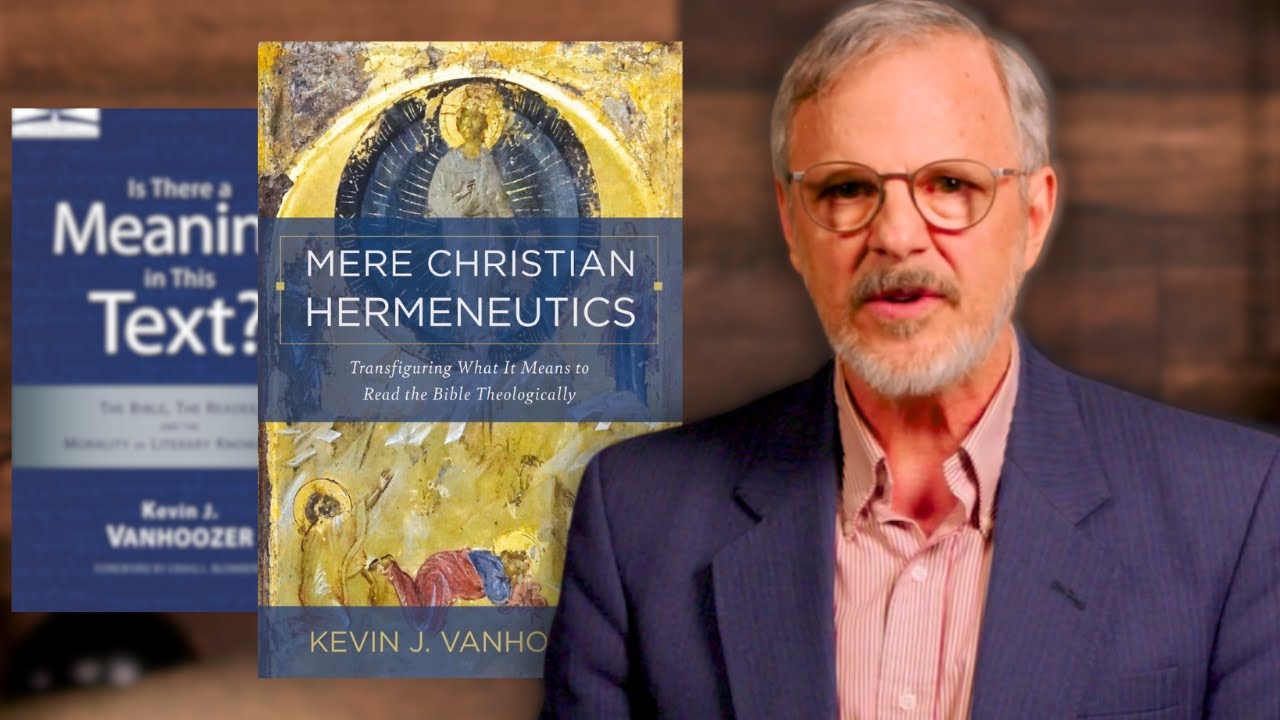
What is important is this statement by Vanhoozer. His Mere Christian Hermeneutics is one of my primary text this year for my Ph.D. course, OT Hermeneutics and Theology (Lancaster Bible College’s Ph.D. in Biblical Studies). In between speaking at the camp this week, I’m prepping for this course that opens August 25, 2025.

On page 102 Vanhoozer makes this statement:

“…whatever their particular denominational (or nondenominational) slant, every church should, minimally, be forming readers to read with a distinctly theological interest: to know and love God.”

It’s always helpful for me to hear this kind of condensing of ministry goals. It helps me keep things from getting too complicated.

In our ministry context, the “to know” God part comes fairly easily; historically, it’s expected in a Bible Church that we will learn biblical information about God.

It’s the “love God” part that is more difficult for us.

One way I attempt to form readers with such a theological interest to know and love God is to regularly ask myself and my hearers:

“Do we love God more as a result of learning this section of Scripture?”

That question may help you as you study for sermons and lessons.

May our Lord receive glory in the church and in Christ Jesus (Ephesians 3:21) as a result of our Spirit-driven efforts to create learners who love Him.

Randal

P.S. Okay, just one picture of Elim.

Is Your Preaching More Translation Than Interpretation?

Your Preaching Reflects Your Understanding of Meaning

I am getting back into a more normal schedule after teaching two classes. The first was an eight week master’s level course at Lancaster Bible College, Hebrew Exegesis to Exposition. The second was a Doctor of Ministry cohort, From the Study to the Pulpit, at Gordon-Conwell Theological Seminary.

Here’s a look at the D.Min. group under the lights:

One of my goals was to help my new friends answer this basic question:

What does this pericope mean?

It sounds elementary, but proves quite challenging whether I’m posing the question to Masters, DMins, or PhD students.

If I asked you, “What does this Scripture mean?” how would you answer?

Exodus 4:24 At a lodging place on the way the Lord met him and sought to put him to death. 25 Then Zipporah took a flint and cut off her son’s foreskin and touched Moses’ feet with it and said, “Surely you are a bridegroom of blood to me!” 26 So he let him alone. It was then that she said, “A bridegroom of blood,” because of the circumcision.

What I’ve discovered is that we are better at providing meaning in the form of summary or translation. We’re heavy on word studies and translating all the interesting concepts in this brief, bizarre OT narrative. We use the best tools we can to get to the bottom of their respective meanings.

If we are trained in some variation of identifying the big idea, we might present meaning as one cumbersome sentence that captures the interrelationship between the ideas of the narrative:

The results of the Lord meeting Moses and seeking to put him to death was that Zipporah circumcises their son, insults her husband, and the Lord let Moses alone.

Notice that this is not interpretation, but a summary of the narrative.

As I continue to teach the intersection of hermeneutics and homiletics, I keep urging my friends to consider what it means to interpret the meaning of a text.

More on that later.

For now, analyze your own method. Can you identify the meaning of the narrative? Does your meaning statement(s) include interpretation? If so, what is interpretation and what does that mean for your preaching/teaching?

Randal