
A Lesson on Preaching from the Producers of, Everybody Loves Raymond

Conveying the “Life and Death” Importance of the Word of God Each Sunday

A few weeks ago, Michele and I watched the 30th Anniversary Reunion of the main producer and cast of the TV series sitcom, Everybody Loves Raymond.

If you’ve read my blog for a while you know I enjoy seeing parallels between communicating God’s Word in church on a Sunday and the way performers communicate through their craft. Here’s another example.

The producers of, Everybody Loves Raymond, explained why that series worked so well with that cast. Their answer was:

“[the cast was] fully committed to silly things as if it was life and death.”

The commitment of the cast of actors made the show enjoyable because it made it believable. All good actors do that to draw you into the reality they are creating.

How much more so should we be conveying our commitment to, not a silly thing, but the most important thing: God’s revelation in sacred Scripture!

Effective communicators convey that sense of “life and death” in their preaching of God’s Word. May our people this coming Sunday sense this so our Lord receives glory in the church and in Christ Jesus (Ephesians 3:21).

Randal

P.S. Blessed New Year to you!

P.P.S. I may have mentioned many posts ago that one of the most common elements in my evaluation of young preachers is that I don’t get the sense from you that this Word from God is a matter of life and death.
The Best Way to Keep up With Hebrew: Daily Dose

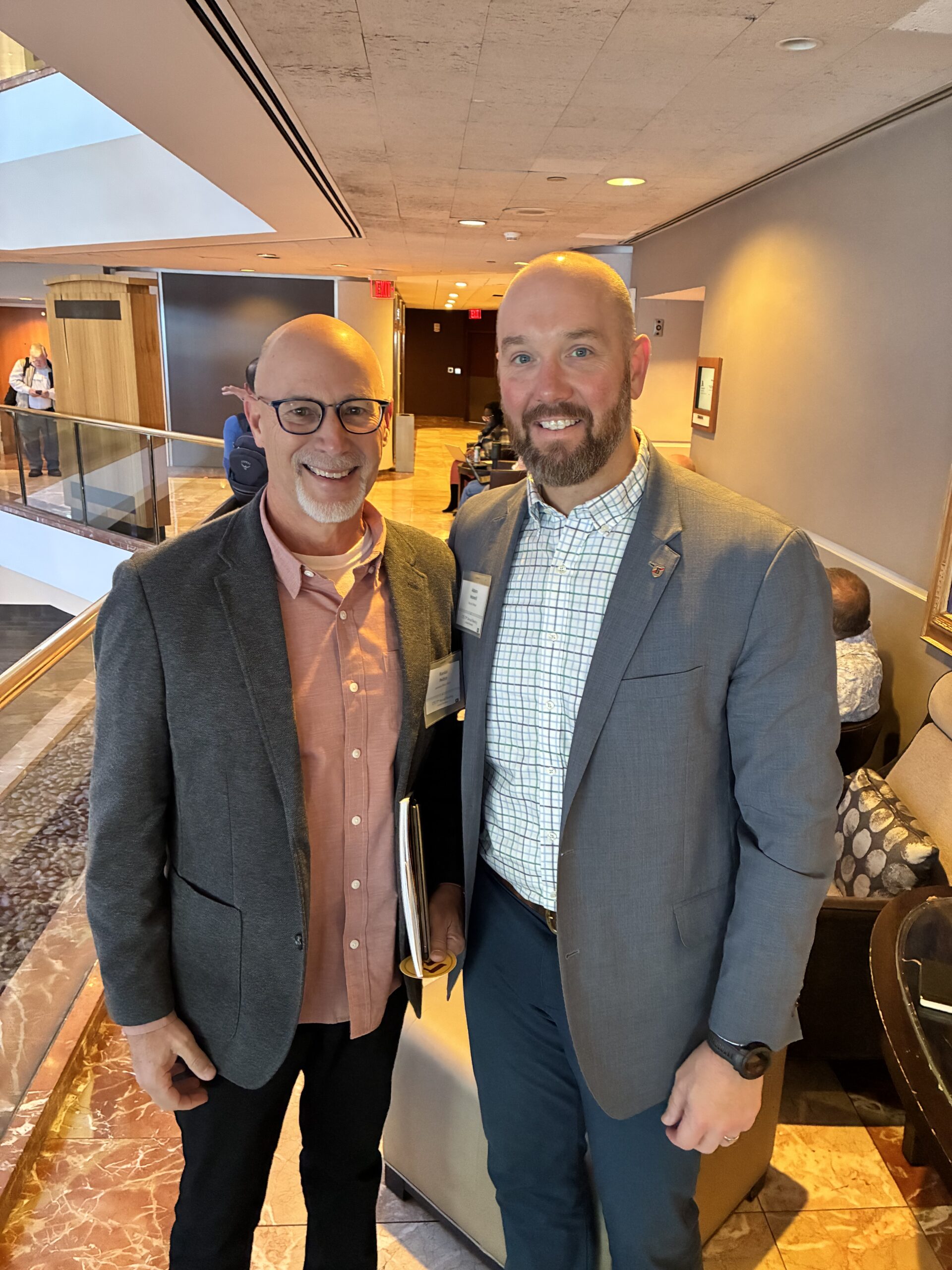
What a joy to run into Adam Howell, the Daily Dose of Hebrew guy, at ETS!

I am currently on vacation this week following a wonderful first experience at the Evangelical Homiletics Society (more on that in another post).

Michele and I had the privilege to attend the annual ETS conference in Boston last week. On one of my breaks in between paper presentations, I ran into Adam Howell, the Daily Dose of Hebrew guy (kind of like the famous Capital One Bank Guy on TV). I thanked him for his work and told him I listen to him almost every morning.

If your Hebrew is a bit rusty or you simply want to keep your proficiency growing, nothing beats watching the Daily Dose of Hebrew. I get an email early each morning (there’s a Greek version too that’s excellent). The videos are about 3 minutes long. On your screen is a Hebrew Bible verse or part of a verse. Adam, who teaches at Boyce College, the undergraduate school at The Southern Baptist Theological Seminary in Louisville, KY, highlights the text as he reads the Hebrew and explains some of the grammatical issues.

From the time I learned about Daily Dose I have been making it a part of my morning routine. I can’t speak highly enough about what Adam does and how helpful the videos are.

One of the things I notice in young preachers with little or no Hebrew training: they mispronounce the Hebrew that they refer to in their sermon. While it’s not a sin punishable by death–hey, I mispronounce English words for goodness sakes!–it does eat at your credibility with some listeners. Plus, you owe it to your faith-family to be a good student of the word of God. If you’re going to dabble with the original languages, dabble with some measure of skill!

Daily Dose is the way to go!

May our Lord receive glory in the church and in Christ Jesus (Ephesians 3:21) as you expound the Word of God to your faith-family.

Randal

Our New Commentary on Genesis Has Arrived!

John and I took seven years to write this! Slow, I know!! (*smile*)

What was “forthcoming” for some time is now here!

While I was away on my annual motorcycle ride to old Quebec City with seven others, Michele sent me a picture of the two boxes Kregel sent me. When I got home I had the joy of opening the author copies of my new commentary on Genesis.

It took approximately seven years to complete this project. More than once I said to the Lord, “I love Genesis, but I am so done with it!” (I’m writing now so God was gracious in understanding what I meant.)

The Kerux Commentary series matches a biblical scholar (Dr. John Soden) with a preaching specialist (me). As you’ll see, John did the lion’s share of the work. He is an excellent exegete and adept at starting the move from exegetical ideas to theological ideas that get closer to serving the church.

Each pericope begins with one page that includes an exegetical idea, theological focus, preaching idea, and preaching pointers. Then the section proper begins with Literary Structure and Themes, technical Exposition that includes translation analysis and outline points, extensive Theological Focus, and Preaching and Teaching Strategies.

In the Preaching and Teaching Strategies is a section on Exegetical and Theological Synthesis, an attempt to tie together the exegesis and theology to form a solid foundation for preaching insights. The Preaching Idea is repeated and followed by Contemporary Connections: What does it mean? Is it true? and Now What? (you might remember these as Haddon Robinson’s three functional questions; he used to say you can only do three things to an idea: explain it, prove it, or apply it; this section of the commentary does all three to the degree the preaching portion calls for them).

Finally, I provide suggested preaching outline(s), Creativity in Presentation, and Discussion Questions for preachers and teachers to consider.

Anyway, there it is in a nutshell.

What a privilege for me to be invited to participate. I thank our Lord for insights and endurance to accomplish this in the middle of an extremely busy time in my life. May our Lord receive glory in the church and in Christ Jesus (Ephesians 3:21) whenever Genesis is preached/taught.

Randal

A Worthy Goal for Our Preaching and Teaching in Church

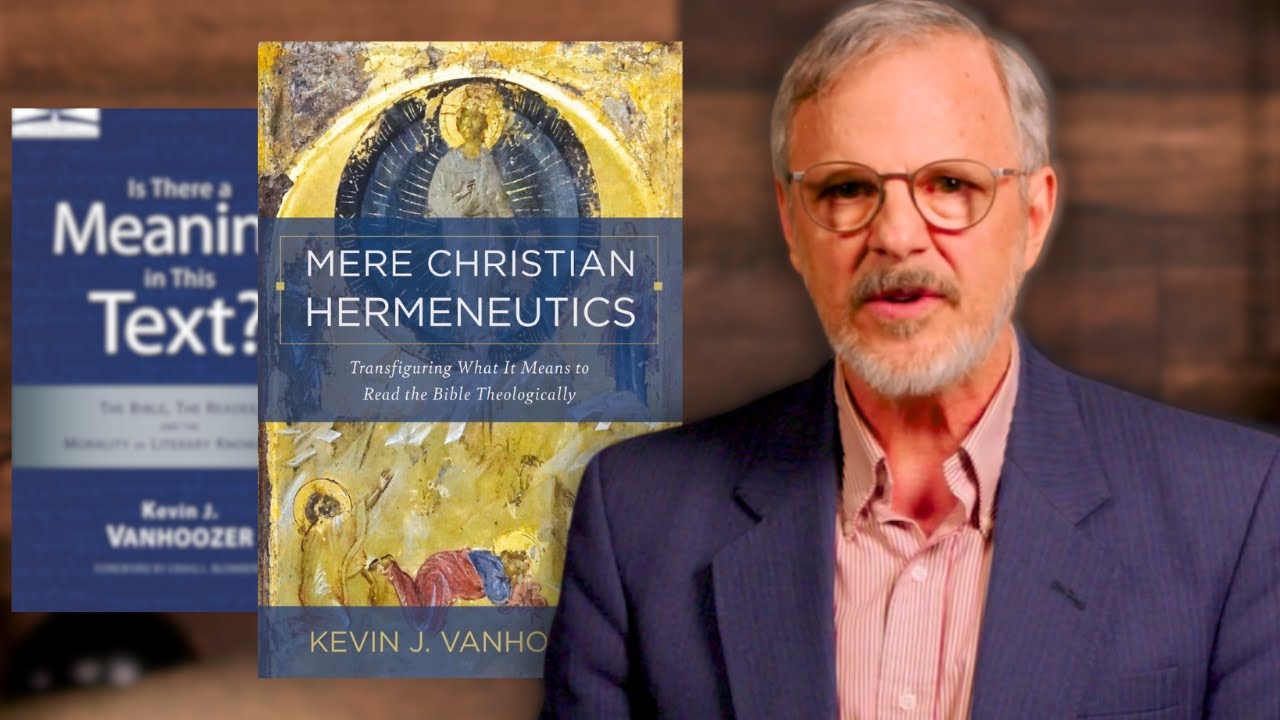
Vanhoozer makes a very helpful statement: “…every church should, minimally, be forming readers to…”

I am writing from Elim Lodge in Lakehurst, Ontario, Canada. I won’t show you pictures because it’s located on a beautiful peninsula, surrounded by Pigeon Lake, and you’ll feel badly. The camp director and I studied together 40 years ago in NB, Canada and there are two other couples serving here that our dear friends of ours from our years serving in Canada. It’s been a great reunion.

But, that’s not important right now.

What is important is this statement by Vanhoozer. His Mere Christian Hermeneutics is one of my primary text this year for my Ph.D. course, OT Hermeneutics and Theology (Lancaster Bible College’s Ph.D. in Biblical Studies). In between speaking at the camp this week, I’m prepping for this course that opens August 25, 2025.

On page 102 Vanhoozer makes this statement:

“…whatever their particular denominational (or nondenominational) slant, every church should, minimally, be forming readers to read with a distinctly theological interest: to know and love God.”

It’s always helpful for me to hear this kind of condensing of ministry goals. It helps me keep things from getting too complicated.

In our ministry context, the “to know” God part comes fairly easily; historically, it’s expected in a Bible Church that we will learn biblical information about God.

It’s the “love God” part that is more difficult for us.

One way I attempt to form readers with such a theological interest to know and love God is to regularly ask myself and my hearers:

“Do we love God more as a result of learning this section of Scripture?”

That question may help you as you study for sermons and lessons.

May our Lord receive glory in the church and in Christ Jesus (Ephesians 3:21) as a result of our Spirit-driven efforts to create learners who love Him.

Randal

P.S. Okay, just one picture of Elim.

What Can I Do That AI Can’t? Reflections for Preachers in a Digital Age

What Preachers Can Do That IA Can’t Do

I am offering a more light-hearted post this afternoon, the result of my first exploration into ChatGPT (I know, I’m late to the party!).

So yesterday, before completing my sermon review for this morning’s preaching on Psalm 95, I decided to see how AI would handle that Psalm. The short version: very impressive with respect to summarizing the main idea and suggesting applications.

Then, I thought: “I wonder how it would answer this question: ‘What can I do as a preacher that you cannot do?'” Be encouraged in your work by the following:

  1. You provide Holy Spirit-empowered exposition of Scripture. “AI can analyze, suggest, even imitate—but it cannot be filled with the Spirit or move in communion with the living God.
    You preach with presence. AI can only offer presence in metaphor.”
  2. You preach to your people in person. “You embody the Word in relationship. AI only operates in response.” [As an aside, even the great preachers online or TV cannot do what you do: provide that personal context.]
  3. Your preaching is an act of soul-watching. “Preaching carries divine weight (kērygma) that can’t be outsourced to a machine. Your voice carries the mystery of vocation.”
  4. You preach as a person who is under the Word of God with all your own struggles of faith. While you’re preaching you’re responding with your hearers. “You can bleed with the text. AI can only parse it.”
  5. Your preaching includes helping your listeners apply their lives to God’s Word in the moment. “You can pastor while you preach. AI can only perform analysis.”

Then, ChatGPT provided this wonderful little summary:

In Summary:

Preacher (You)AI (Me)
Spirit-filledData-driven
Embodied & pastoralDisembodied & generic
Relational & contextualContextual only to prompt
Authority by callingUtility by design
Participates in mysteryObserves the mystery

Then, finally, it gave this closing statement:

“This distinction is not meant to diminish AI’s utility but to clarify the uniqueness of the preacher’s role. Tools like this can assist, supplement, and enhance our preparation—but they can’t replace the Spirit-led, relational, incarnational work of preaching.”

It can’t replace YOU! Be encouraged!

May our Lord receive glory in the church and in Christ Jesus (Ephesians 3:21) as you do what AI can’t do!

Randal

How to Read the Psalms for Authorized Applications

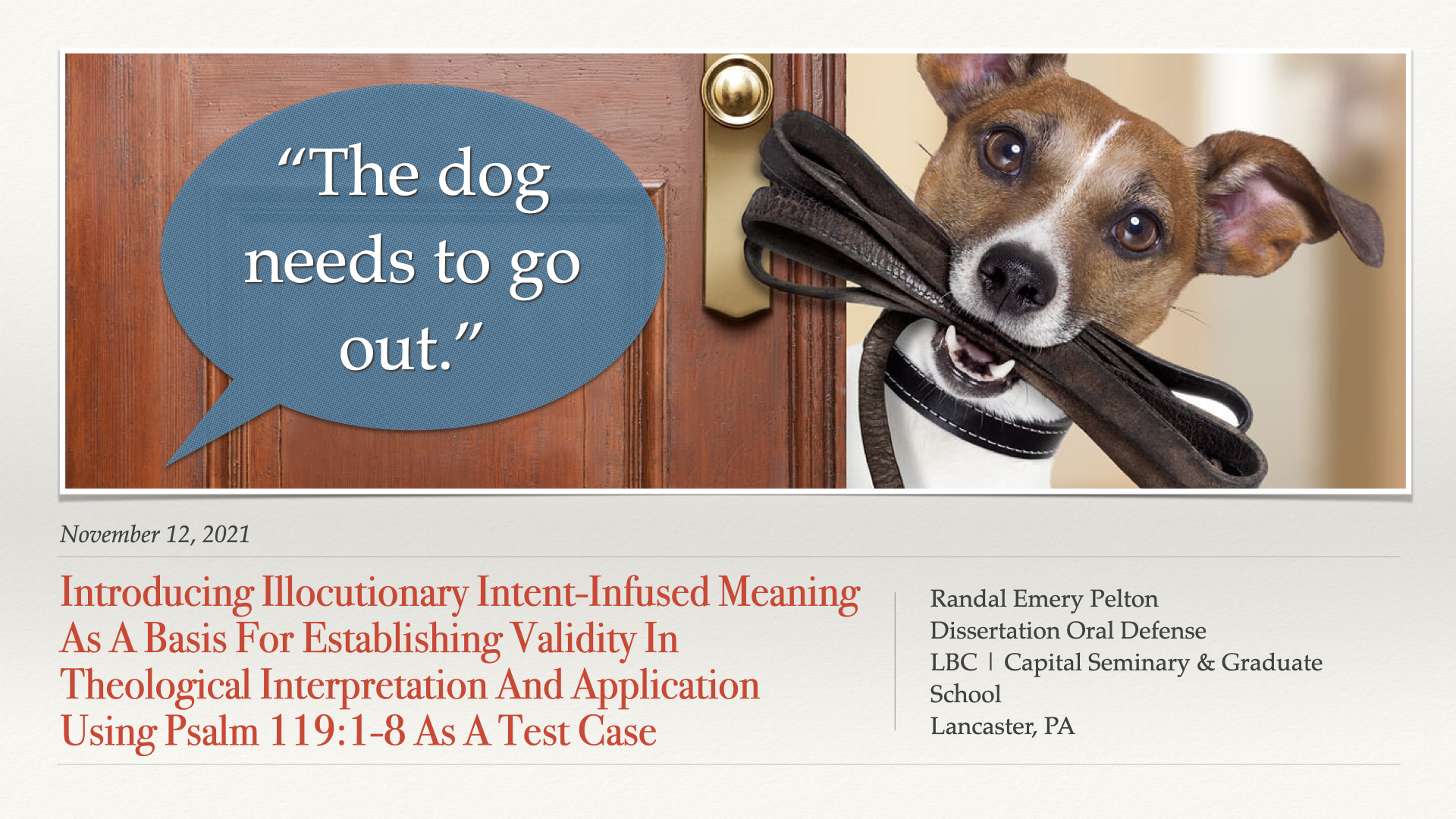
If Michele says, “Randal, the dog needs to go out,” what she really means is…

After almost a two-year break from preaching through the Psalter, I am back in it. Here is a way for you to discover how the Psalms function for the church. What follows is a summary of illocutionary categories. The term, illocutionary, comes from the world of speech act theory. The categories come from the writings of Austin and Searle. As I result of my recent studies into speech act exegesis, I have added an inferential step (“with the intention of…”) to the categories to show how illocutionary acts do something to the reader.

Here are how the illocutionary categories function in the Psalms:

Assertives = the Psalmist asserts himself by stating something to be true or announcing the current state of affairs with the intention of eliciting faith in the biblical reality and the desire to enjoy or avoid the state depending on its character.

Directives = the Psalmist directs the hearer to do something through a command or instruction with the intention of urging either adherence or avoidance depending on the nature of the command.

Commissives = the Psalmist commits himself to some future action through making a promise or stating that he will do something with the intention of urging readers to follow.

Expressives = the Psalmist expresses himself in the sense of revealing feelings, such as thankfulness or gratitude, or thoughts with the intention of eliciting the same feelings in the reader.

Declarations = the Psalmist declares something and in the act of declaring, that something becomes reality such as a blessing with the intention of the reader experiencing the created condition.

In summary, assertives assert, directives direct, commissives commit, expressives express, and declarations declare.

When you work in the Psalms watch for the Psalmists doing these things.

In the case of Michele stating, “Randal, the dog needs to go out,” what she is doing is really asking me to take the dog out. That’s how illocutionary intent works.

As you allow these categories to work for you, your listeners will hear how the Psalms work and our Lord will receive glory in the church and in Christ Jesus (Ephesians 3:21).

Randal

The Monday Morning Expositor: Announcing A New Arrival!

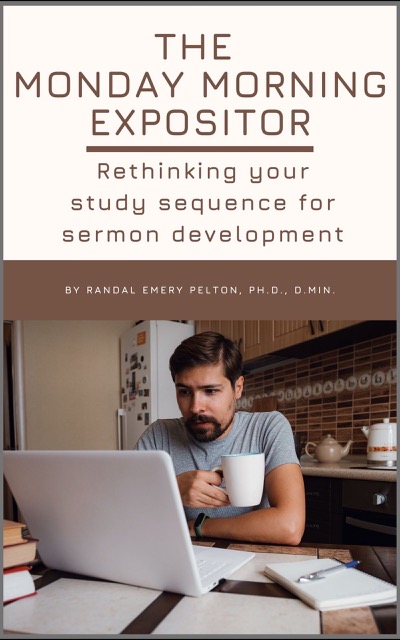
That’s not me in the picture, but pretend it’s you on a Monday morning when you are preparing to preach. What do you do for your first few hours?

I am happy to say that the e-book version of my latest book, The Monday Morning Expository: Rethinking Your Study Sequence For Sermon Development, is available.

The book is arguing a reversal of the normal study sequence. Usually, pastors begin to do their exegesis and amass all kinds of exegetical data from the passage. That results in notes filled with isolated fragments of meaning.

Through the years I’ve heard this comment from preaching pastors: “I get toward the end of the week, have lots of notes, but still don’t have the sermon yet.”

As I’ve thought about those comments and experienced it myself in my early years, it led me to the contexts of this book. I give more detail early in the book about how the new sequence came about in my own practice.

For now, if you would like to think about the first few hours of your study for sermon preparation, you might be interested in my book. It fleshes out the following acrostic (my students and blog readers might recall this):

A.B.I.T

Argument, Big Idea, Intention, and Theology.

If you practice this method on Monday morning, or whatever day your first few hours of study occur, you will end up with more of a big picture of the meaning and application of your preaching portion. You will have the gist of the sermon even though you don’t yet have all the exegetical details.

I know it sounds backwards, but that’s the point. Trust me when I say, you can gain great insight into preaching your passage with this process.

Anyway, I hope you’re enjoying preaching through Advent. May our Lord receive glory in the church and in Christ Jesus (Ephesians 3:21) through our Spirit-driven efforts.

Randal

How Does Your Text for This Sunday Function for the Church?

You and I Practice Theological Interpretation Every Week!

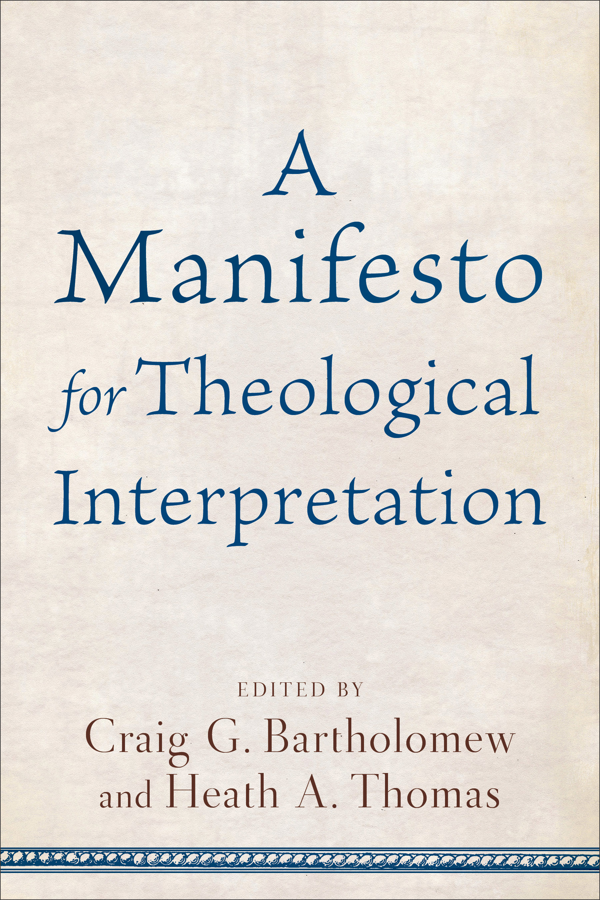
A couple of weeks ago I finished reading, A Manifesto for Theological Interpretation, edited by Bartholomew and Thomas. It’s important for our preaching because of the way in which they define TI (or TIS, theological interpretation of scripture):

“…we define broadly as interpretation of the Bible for the church…” (p. ix.)

The question is, what do they mean “for the church”?

I usually expand the definition a little bit by saying that TI/TIS is interpreting Scripture so it functions for the church.

But, then, what do I mean by “function”?

Think of the function of Scripture in terms of what God intends for Scripture to do to His readers. You might recognize that this meaning of TI closely resembles what we’ve always known as the application of Scripture. Christopher Wright wrote describes this as applying life to the Bible (I think he wrote this in his book, The Mission of God).

On page 17 they define TI as:

“…theological interpretation reads Scripture to hear God’s address, so that the church might be transformed into the image of Christ of the sake of the world.”

With those definitions in mind, our pressing question is, how does the text signal its intention?

I’ve been preaching through Matthew’s gospel since returning from my sabbatical so here’s an example from this morning’s study time. My preaching portion is Matthew 15:1-9. The religious leaders question Jesus about His disciples breaking “the tradition of the elders” (they don’t wash their hands!). Jesus replies by challenging them about their habit of breaking God’s commandments by the way they keep their traditions (they don’t care for their parents because they give the money to God).

In vv. 7-9 Jesus insults them (calling them “hypocrites”) and announces to them that Isaiah prophesied about them.

So, it’s fairly clear to me after my Monday morning study session that this text is designed to make sure all professing Christians do not follow the example of the religious leaders. They function as a “go and do otherwise” example.

If you have your text for this coming Sunday, can you identify early on how it functions for the church?

May our Lord receive glory in the church and in Christ Jesus (Ephesians 3:21) as we practice theological interpretation each week.

Randal

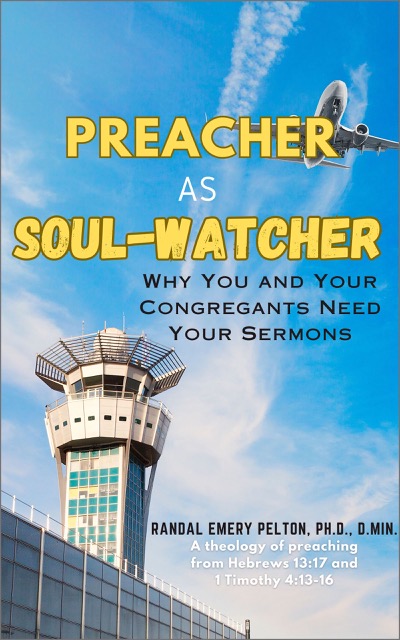
Preacher As Soul-Watcher Paperback Now Available

If You’re Like Me and Prefer to Hold a Book…

This week I am still trying to complete some writing projects from my recent sabbatical. One of those projects involved getting the manuscript of, Preacher As Soul-Watcher, in shape for those who prefer the paperback version.

Thanks to my dear wife, Michele, the paperback is available!

My prayer is that the e-book or paperback version encourages pastors to preach for God’s glory in their faith-families.

If you’re not familiar with the book’s content, here are the two Scriptures in focus:

Hebrews 13:17 Obey your leaders and submit to them, for they watch over your souls, as those who will have to give an account. Let them do this with joy and not with groaning, for that would be of not advantage to you. (emphasis added)

1 Timothy 4:13-16 Until I come, devote yourself to the public reading of Scripture, to exhortation, to teaching. Do not neglect the gift you have, which was given you by prophecy when the council of elders laid their hands on you. Practice these things, immerse yourself in them, so that all may see your progress. keep a close watch on yourself and on the teaching. Persist in this, for by so doing you will save both yourself and your hearers. (emphasis added)

I hope you were encouraged yesterday as you spoke on behalf of our Lord.

Randal

My New Book: Preacher as Soul-Watcher: Why You and Your Congregants Need Your Sermons

I finally completed my theology of preaching for the local church!

Wow! This has been on my mind since the mid- to late-90’s! Click here to read a sample section.

What took so long? Life and ministry, I guess, such as pursuing more learning, writing more books, and preparing to teach classes through the years.

My first exposure to Hebrews 13:17 where it really caught my attention was when I was preaching through the book of Hebrews at The People’s Church in Somerville, NB, Canada in the mid-90’s.

Then, at the inaugural meeting of the Evangelical Homiletics Society on the campus of Gordon-Conwell Theological Seminary, I was invited to preach as part of the conference schedule (either the fall of ’96 or ’97?). I selected Hebrews 13:17. It reads,

“Obey your leaders and submit to them, for they are keeping watch over your souls, as those who will have to give an account. Let them do this with joy and not with groaning, for that would be of no advantage to you.”

It was important that I remind myself and EHS members that preaching is a subset of soul-watching.

Fast-forward to August 1, 2024 and I finally published my thoughts on a theology of preaching from that text and also 1 Timothy 4:13-16, the end of which reads,

“…Keep a close watch on yourself and on the teaching. Persist in this, for by so doing you will save both yourself and your hearers.”

For years, God has given me the great privilege of studying hermeneutics and homiletics with other soul-watchers from all over the world. If you have blessed me with your presence in the classroom through the years, huge thanks. You may be interested in this expanded version of some of the things we, no doubt, talked about. If we’ve never met and you’re a pastor that preaches, you might be interested in my thoughts on why our preaching is so important.

You can find Preacher as Soul-Watcher on Amazon (KDP) or click the link above.

May our Lord continue to receive glory in the church and in Christ Jesus as we watch over the souls entrusted to our care (Ephesians 3:21).

Randal

P.S. Over the next few weeks I will provide some excerpts from Preacher as Soul-Watcher. As an Amazon Associate I earn from qualifying purchases.